How to Make Crystal Art Cards on You Tube
xiii means to amend your card fine art
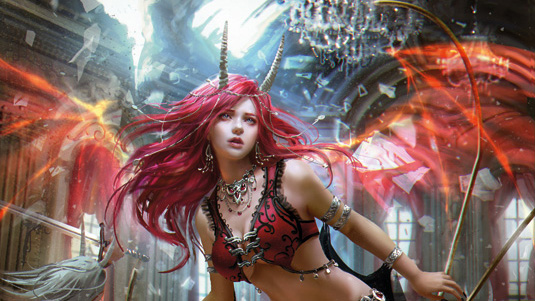
Even though I started dabbling in how to draw fantasy art equally a teen, for a long time I never idea of it as any more than than a hobby. The first decisive step on the illustration path was putting my best pencils to 1 side and getting a Wacom tablet. Switching to digital eventually proved to be a game changer for me because it solved both the issue of speed and the high cost of fine art materials.
I attended an fine art school, but found that the emphasis was placed on gimmicky trends, and so I had to learn almost of what I know about figurative painting on my own.
However, a formal art education gave me a better perspective on technical matters and possibly created a framework for an efficient learning approach. Then the tips in this workshop are an assorted collection of theoretical principles I picked upwards in school, personal observations and advices I found online.
I'm currently illustrating cards for Applibot's Legend of the Cryptids, a fantasy game for smartphones, so I'm going to apply images I created for the company to show how I employ this information in practice and, hopefully, provide some useful insight for those who are interested in producing similar work.
01. Deciding on the composition
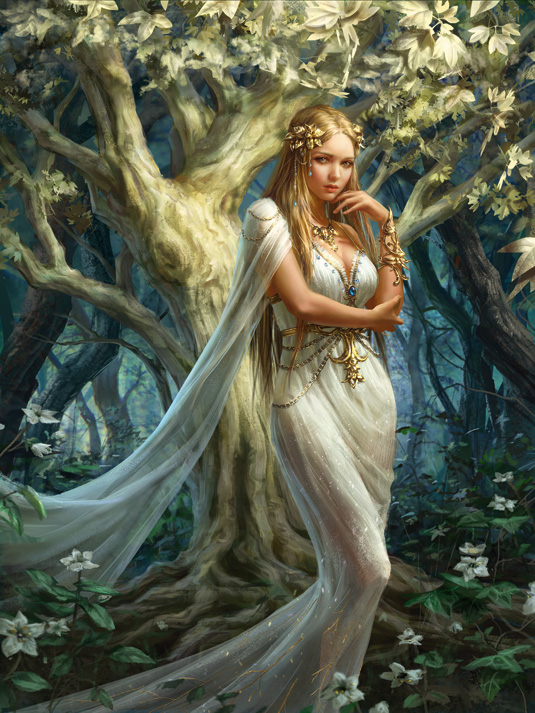
There are basically ii types of limerick: dynamic and static. The first is characterised by diagonal lines that add movement, while the second features strong verticals and horizontals that either assistance to create a at-home atmosphere if horizontals predominate or suggest harshness if the verticals are emphasised.
I prefer static compositions, only they can exist a bit tiresome for fantasy themes. As a compromise, I use softer diagonal shapes every bit accents in the foreground. For case, placing objects such as flowing fabric here and there helps to pause upwardly the monotony and develops a pleasing contrast with the groundwork.
02. When to apply symmetry
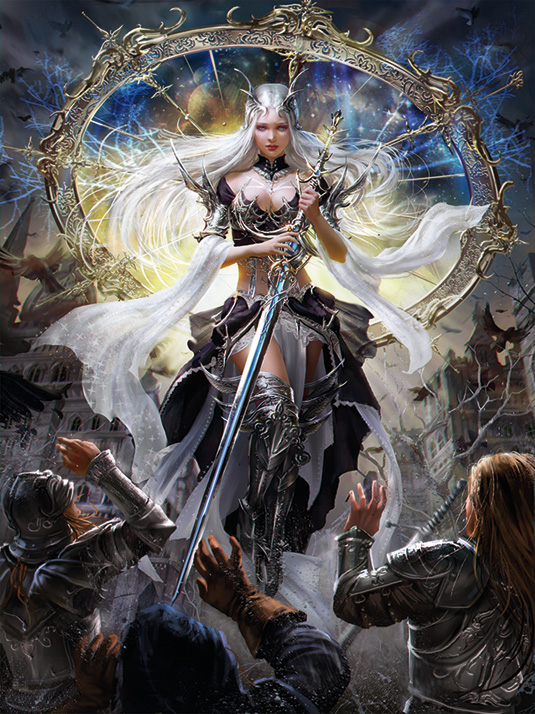
There's a time and a place to employ bilaterally symmetrical layouts. Indeed, I'd get so far equally to say that this type of composition should be used sparingly, simply it's certainly effective in appropriate contexts. Its visual impact is high because all lines converge and the eye is fatigued towards the centre, so illustrated subject matter such equally book covers or movie posters can benefit from it.
Symmetrical poses can brand a character look regal, powerful or heroic. They usually work particularly well with characters who have wings and mythological beings in general, because they remind the viewer of iconic representations.
03. Utilise the South-curve principle
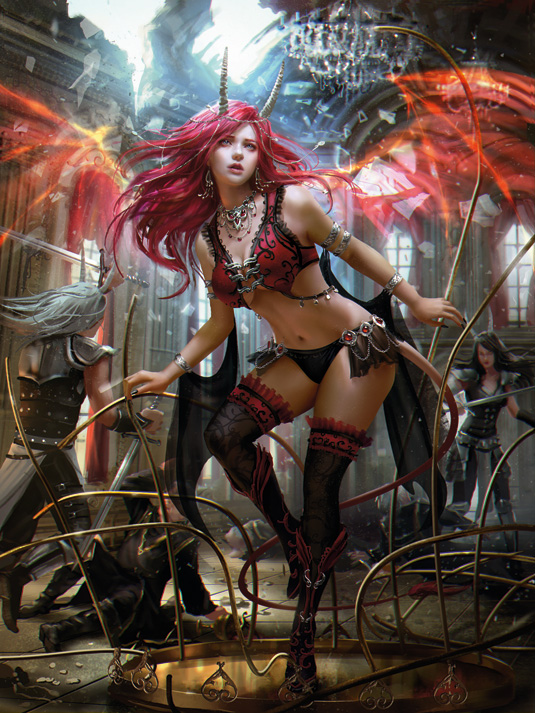
This goes back to ancient Greek fine art and is considered platonic for depicting the homo figure. The trunk should be positioned in a style that describes an S-shaped line, so that the shoulders and the hips are angled differently. The most bones pose that uses this principle is contrapposto, where the effigy rests all its weight on one leg.
In analogy, this formula can be taken even further, and curves and proportions can exist exaggerated or stylised according to your own painting method.
04. Develop focal points
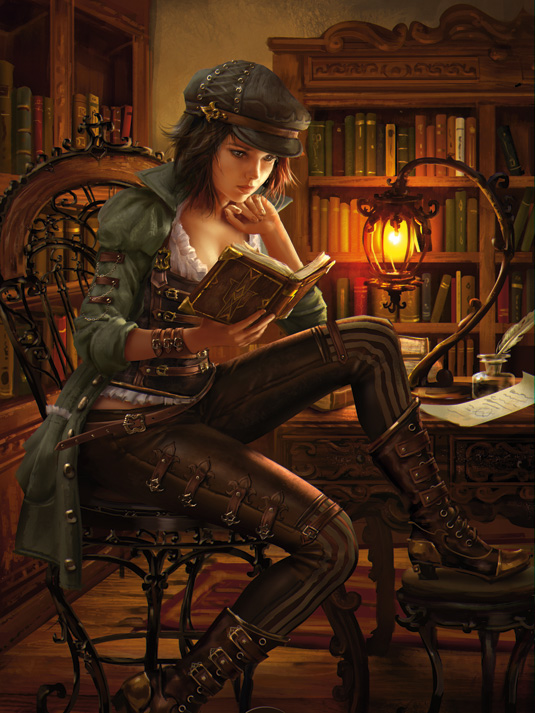
The first thing people notice in a picture are human faces, so they become natural focal points and should, as such, be placed carefully. In that location are several ways to accentuate them or shift the interest towards other areas of the prototype. One is manipulating light, such equally keeping about of the prototype relatively as lit and have stiff light striking the area we want to stand out.
Variation in brush strokes or colours tin also be used, rendering the focal point and keeping the residual of the image rougher and more desaturated.
05. Dramatic low-cal
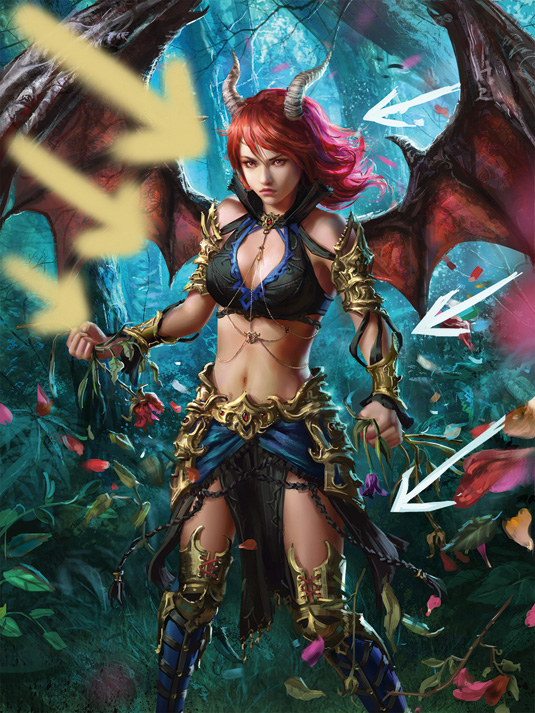
Interesting lightning can apace give an paradigm a fantasy look. Ane of the most unremarkably used – and my go-to lightning scheme – comprises a chief softer calorie-free and a harsher back low-cal. This combination is fifty-fifty more than hit if the light sources have complementary colours, but this can soon become cheesy if overused!
Another of my favourite gear up-ups is a single light source filtered through a window, placed at an angle that suggests the late afternoon sunlight.
06. Framing techniques
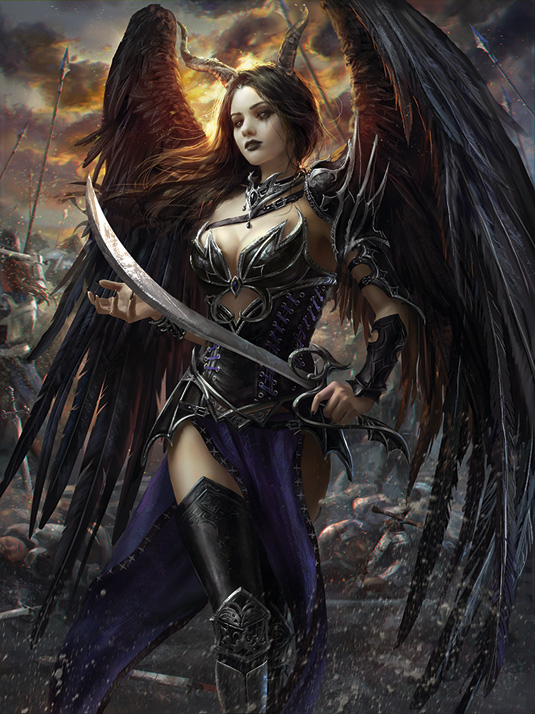
Depending on the purpose of an analogy, some limitations can come up into play and ane of them is framing. My card art is viewed on smartphones, and so the characters need to be large enough to discern details and this means sometimes they won't fit into the frame.
In that location are a few rules of thumb on how to ingather figures: don't cut where in that location are whatever joints, never cut through the hands (they should be either visible or out of the picture) and, for portraits, avoid cropping the ears or chin.
07. Item placement
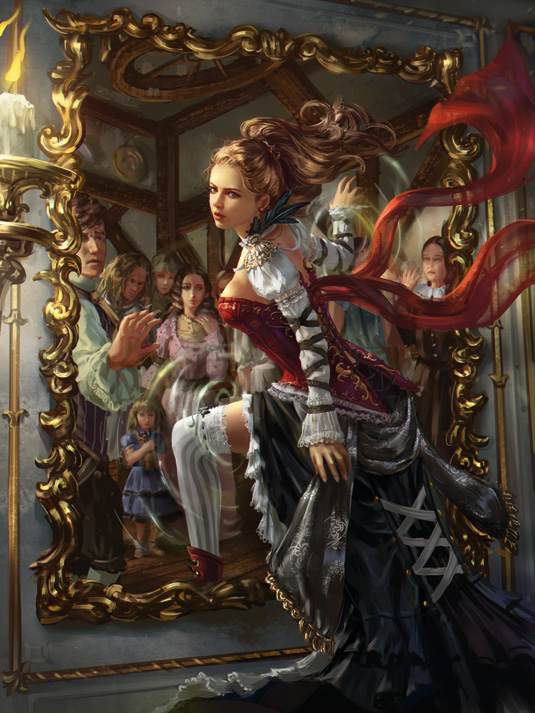
People organise visual elements in categories and group them into larger shapes, based on their proximity to each other. The Gestalt theory of visual perception has derived a serial of rules from this premise.
An open up expanse or a barely suggested object volition be "autocompleted" by the viewer, as long as its shape is recognised as a whole. This is why it's not necessary to polish every detail or worry virtually perfect edges – merely ensure that the main shape is readable from a distance.
08. Brand more of the background
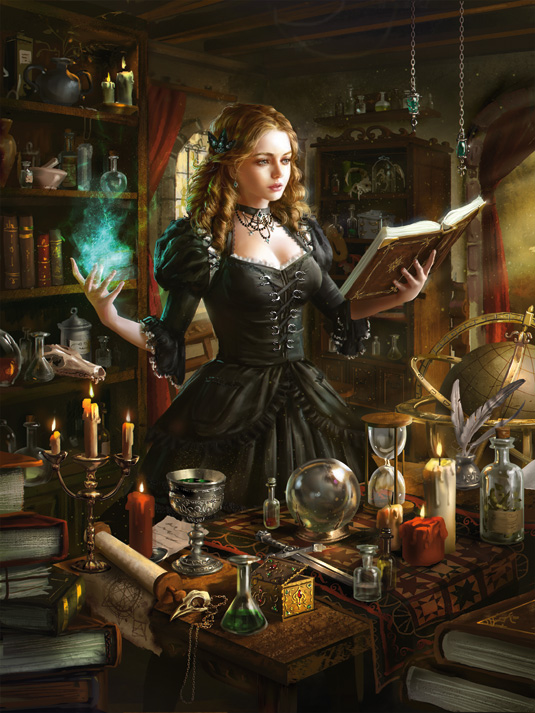
In game cards the focus is patently on the grapheme, but backgrounds and other details add a whole new dimension. You can hint at a character's personality through their environment or draw their social status or occupation with various nearby objects.
A scholarly character could exist surrounded past former tomes and scrolls, a warrior will wait more than menacing with a stormy heaven as a backdrop, and a graphic symbol could be recognised as a witch even without stereotypical costumes, but by decorating her place with alchemical paraphernalia and other mysterious-looking items.
09. Costume pattern
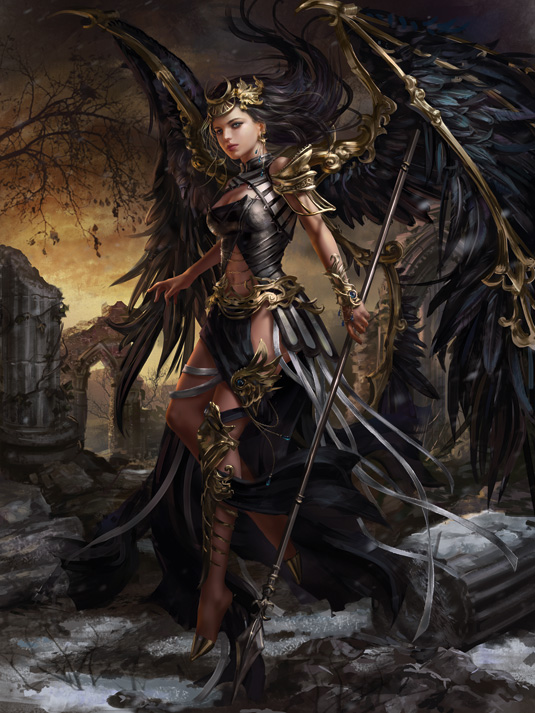
The greatest challenge I confront when designing game cards is coming upwardly with fresh ideas for costumes, weapons and accessories. I follow various mode, history and civilisation-related sites and blogs, and I relieve the nigh interesting clothing and armour designs in an inspiration binder.
I occasionally employ Abracadabra, which generates unpredictable brushtrokes and random shapes, and then I endeavor to discover patterns in the resulted epitome. Costumes can become quite detailed, so to prevent them from looking as well monotonous and "crowded", details should exist grouped and placed but in a few key places.
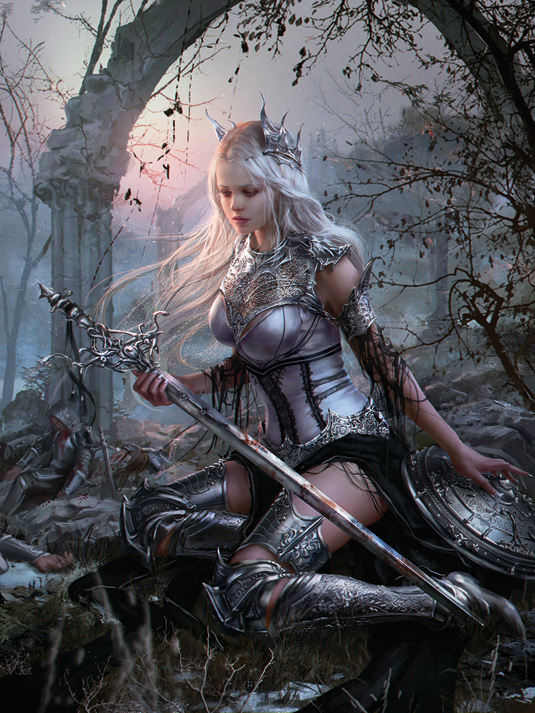
Fantasy fine art draws inspiration from historical sources, then ornate armour and weapons are commonplace. When dealing with metal objects, I oft block in solid shapes and use the the Bevel and Emboss selection (Layer> Layer styles).
This is just to create a quick base to work with and shouldn't be used as a standalone technique (except perhaps for very small details), because information technology'll produce an artificial-looking result. Equally a last touch, I add together a few highlights using a textured brush that'south ready on Colour Dodge mode.
eleven. Advice for painting skin
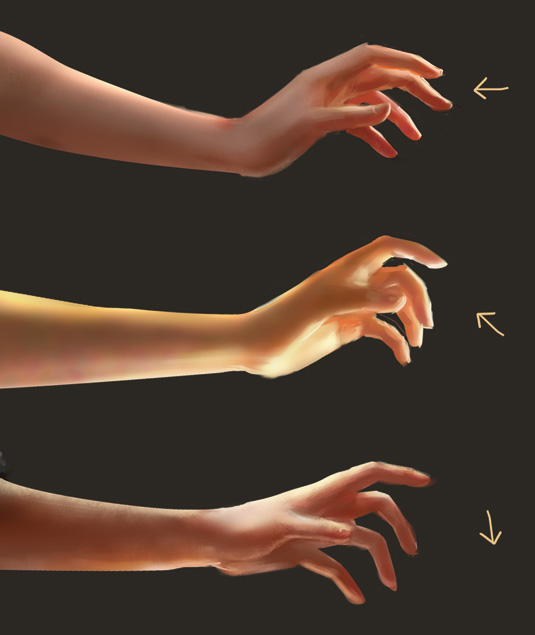
Subtle colour variation is crucial for illustrating realistic skin, just it can as well take a while to alloy convincingly. To save time, I've reduced this principle to alternating between the cold and warm hues that represent to value zones: if lite is warm, then shaded portions are cold and darkest shadows warm again, and vice versa.
The transition line between low-cal and shadow should be slightly more than saturated. Skin is slightly translucent, and then bright calorie-free volition polish through information technology, especially in areas with prominent basic and/or less muscles, such as the cheeks or fingers.
12. Colour considerations
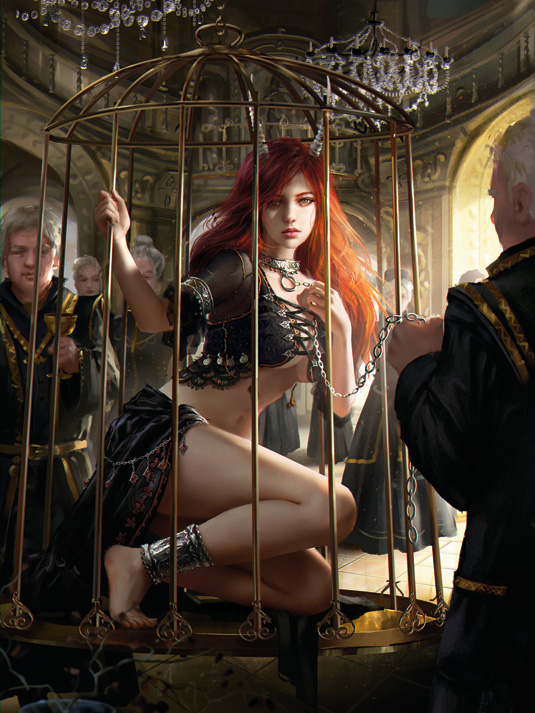
In theory, information technology seems elementary to selection a colour scheme according to the established art theory rules, but achieving realistic results involves more than effort than that. You have to continue in mind that an object'south colour isn't as much determined past the way it's pigmented, merely decided more than by its surround: direct and reflect low-cal, weather, fourth dimension of the solar day and so on.
On the other manus, values are even more important; done right and you tin go away with less-than- perfect-hues. Complementaries are my customary colour scheme, with the warmer colour as an accent.
13. Beyond fantasy
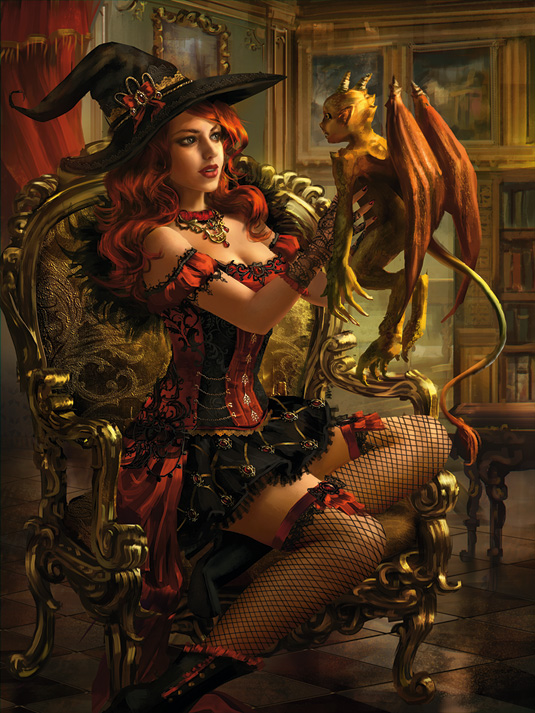
There's no need to limit your concepts at dogmatic sword & sorcery themes; ambivalent elements that work unexpectedly well together are definitely proficient for fantasy designs, whether the arroyo is serious or playful.
Likewise the obvious cantankerous-pollination between fantasy and sci-fi art, other types of imagery, ranging from Renaissance fine art to clean 3D looks can exist incorporated into illustrations to varying degrees. Steampunk aesthetics are known to comport well in the mix and classical pivot-up styles are a perfect way to spice up a carte character.
This commodity originally appeared in ImagineFX issue 131.
Related articles
Source: https://www.creativebloq.com/illustration/13-ways-improve-your-card-art-41619873
0 Response to "How to Make Crystal Art Cards on You Tube"
Post a Comment